

The dining room was full all month and the kitchen never stopped, yet when you close the books there’s less left than you expected. Most owners look at sales first. But in a restaurant, the money usually slips away in the kitchen, not at the register.
Let’s take one neighborhood restaurant and work out how much quietly leaks out over a year.
The example restaurant
A small neighborhood diner run by two people. It’s not a real business, just an example for the math, and we kept the numbers deliberately modest.
Leak #1: the food you throw away
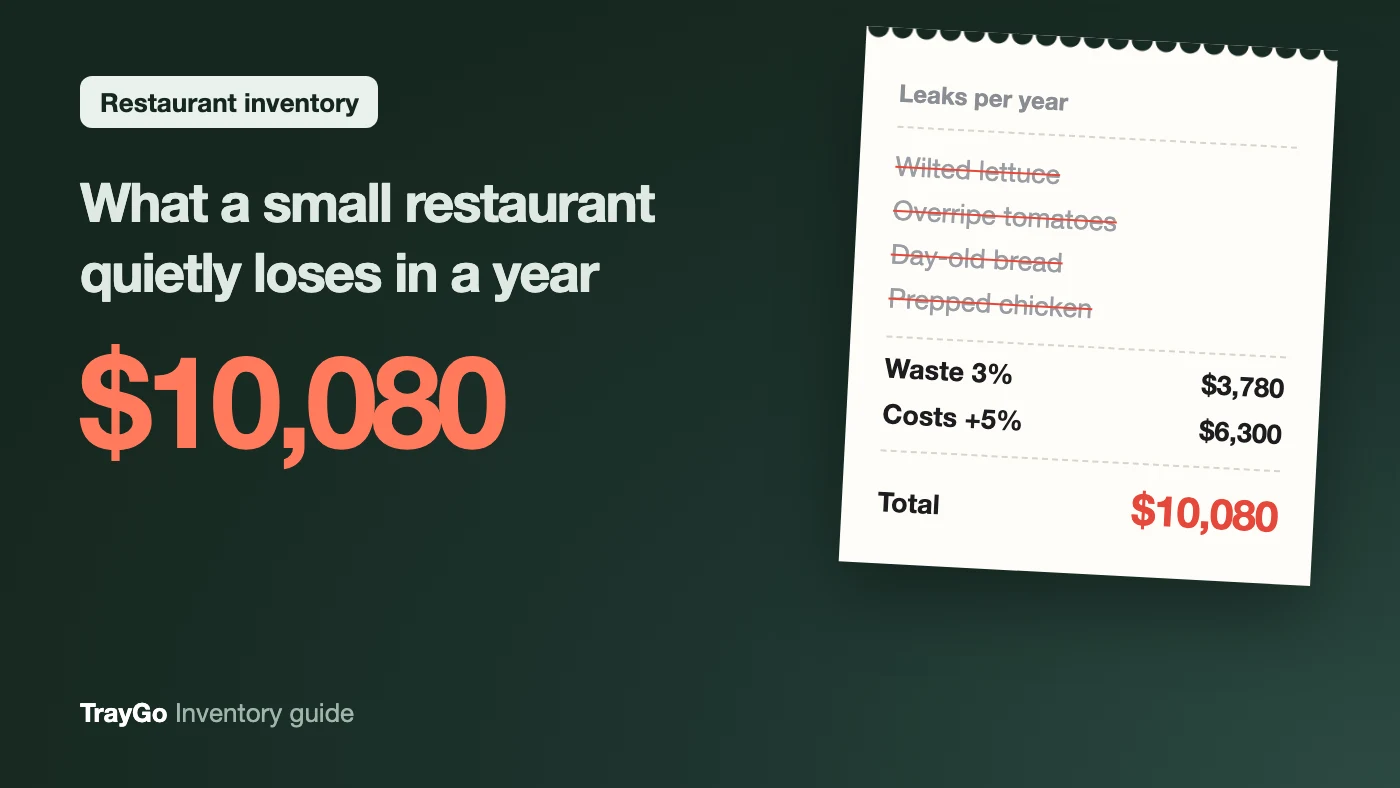
Every kitchen throws things out. Wilted lettuce, overripe tomatoes, yesterday’s bread, prepped chicken you didn’t get through. Say just 3% of that $10,500 ends up in the trash. That’s just 3 cents of every dollar, which is a sign of a well-run kitchen.
Each time it’s only a head of lettuce or half a tray, so the feeling passes quickly. And once it’s in the bin, it isn’t written down anywhere. We collected habits for cutting waste in our article on inventory loss.
Leak #2: costs that went up while prices didn’t
Eggs, beef, cooking oil, coffee. Ingredient prices rarely jump all at once. They creep up, so menu prices often stay the same for over a year. If your ingredients cost 5% more on average and the menu hasn’t changed, here’s what that means.
Same guests, same sales, just less left over. It only shows up as a vague feeling that money is tighter than it used to be. To see sales and margin separately, read how to check margin by product.
Put together: over $10,000 a year
This isn’t money lost to bad business. It’s money you couldn’t see. Every restaurant’s numbers are different, but it’s worth asking what yours would be.
3 reasons this money stays invisible in a restaurant
Nobody has time to write down wasteAfter the lunch rush, whatever gets thrown out is just cleared away. With no record, nobody knows how much goes in the bin each month.
Running out is worse, so you over-orderIf an ingredient runs out, that dish comes off the menu. So you always buy a little extra, and the extra is what you end up throwing away.
Your costs live in your head at old pricesWhen a supplier raises prices a little and you don't update your records, you assume your margins are the same as before.
4 habits that stop the leak
1. Write it down when you throw it out
Record what you use and what you waste separately, and you’ll see which ingredients you bin every week. One month is usually enough to narrow it down to a handful of items.
2. Order by a set level, not by feel
For each ingredient, decide the amount at which you reorder. When you stop buying extra “just in case”, the waste drops with it.
3. First in, first out
Put new deliveries at the back and older stock at the front. Date short-life items and use them in the day’s special as they near expiry.
4. Update your costs the day prices change
When a supplier raises prices, fix your records that same day. With current costs, you have something solid to go on when you review menu prices. Checking the cost of your best-selling dishes once a quarter is a good rhythm.
How TrayGo helps
- Record waste as "Disposal"Log what you use as "Use" and what you throw out as "Disposal". The "Loss trend" in Analytics shows how much you wasted this month and whether it's going up or down.
- Set an alert threshold and get warned before you run outWhen stock drops below the threshold, you get an alert. Add expiry dates and you'll also be reminded before items expire.
- Record supplier prices under "Unit Cost"When a supplier changes prices, just update the unit cost. Your costs stay current.
TrayGo doesn’t deduct ingredients automatically when you sell a dish. You log what you used and what you threw out on your phone, which takes a few taps a day.
Summary
- Even a small restaurant can leak thousands of dollars a year
- The leaks come from two places: wasted food and rising costs
- Record waste too, or you'll never know how much you throw away
- Set reorder levels instead of buying extra by feel
- Update your costs the day supplier prices change